
Ameano BPC-157: the vial, PDA and the blends compared
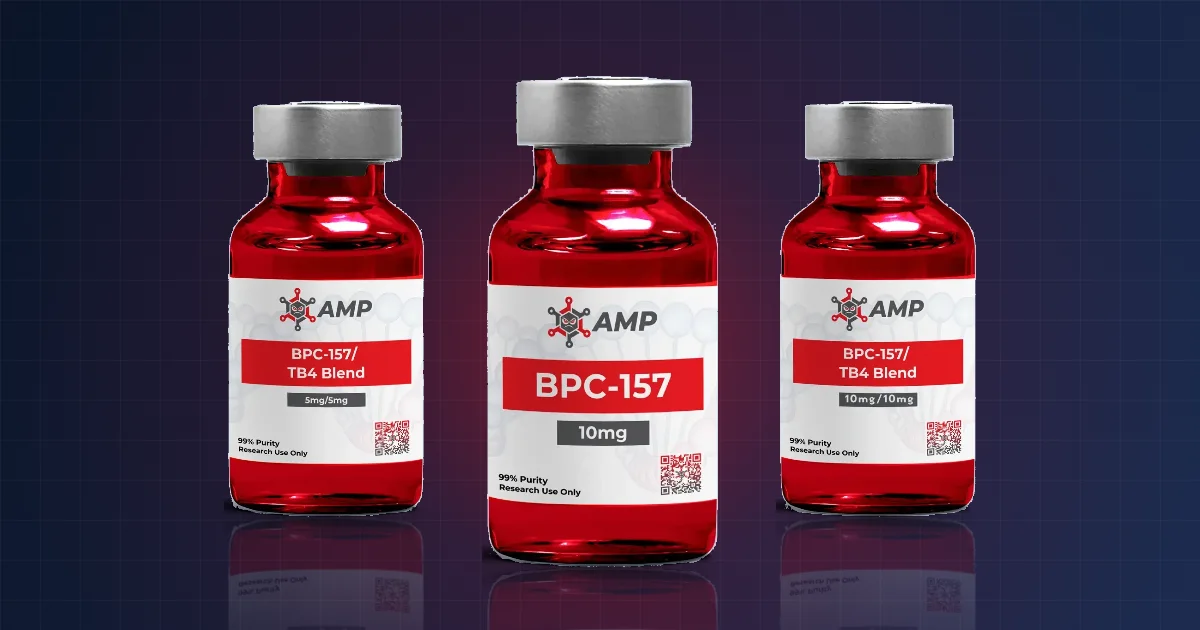
Ameano BPC-157 comes as a 10mg vial on its own, as the related compound PDA, and in four blends. This guide explains what BPC-157 is, what the studies looked at, and which product suits which kind of study.
What is Ameano BPC-157?
BPC-157 is a 15-amino-acid peptide based on a fragment of body protection compound, a protein first found in human gastric juice. Ameano BPC-157 is the synthetic peptide, freeze-dried in a sealed vial at 99% purity or better. It’s one of the most-studied research peptides around, almost entirely in rodents.
It isn’t an approved drug in the US or Europe, and it’s on the World Anti-Doping Agency’s prohibited list. We sell it for laboratory research only.
Ameano BPC-157 products and prices
- BPC-157 10mg: from $44
- PDA 10mg (Pentadeca Arginate): from $44
- BPC-157 TB4 Blend 5mg/5mg: from $53
- BPC-157 TB4 Blend 10mg/10mg: from $88
- Glow Blend (BPC-157/TB4/GHK-Cu) 70mg: from $88
- Klow Blend 80mg: from $98
- Deadpool Blend (BPC-157/TB4/Cartalax) 10mg/10mg/10mg: from $138
The 10mg vial is the plain peptide. PDA (pentadeca arginate) is a closely related 15-amino-acid peptide sold as an arginate salt. The blends save a reconstitution step when you’re studying compounds together: the BPC-157 TB4 blend pairs it with full-length thymosin beta-4, Glow adds GHK-Cu, Klow adds GHK-Cu and KPV, and the Deadpool blend adds the bioregulator Cartalax.
What BPC-157 research looks at
Most of the published work comes from Predrag Sikiric’s group at the University of Zagreb, using rats and mice. Studies have looked at tendon and ligament healing, the stomach and gut lining, and blood vessel growth. Nobody has found a single receptor for it. Lab work points to several pathways, including raised VEGF receptor expression and links with the nitric oxide system. Human data is thin. To read the studies, start with this PubMed search for BPC-157.
BPC-157 with TB-500
BPC-157 is often studied next to TB-500, the full thymosin beta-4 protein, which acts on actin and cell movement. That pairing is why the BPC-157 TB4 blend exists. If you want the two separately so you can vary the ratio, buy the single vials. There’s also TB-500 Frag 17-23, a short fragment, and KPV, a tripeptide often studied in gut inflammation models.
Which Ameano BPC-157 product fits your study?
- One compound, full control of the dose: BPC-157 10mg
- A newer salt form to compare against BPC-157: PDA 10mg
- BPC-157 and TB4 together at a fixed ratio: 5mg/5mg or 10mg/10mg
- Skin and wound models that also use copper peptide: Glow or Klow
Storage and reconstitution
Mix with a sterile liquid such as our research diluent solution. A 10mg vial with 2mL gives 5mg/mL. Keep sealed vials in the fridge, or the freezer for long storage, and use mixed vials within about 28 days. Email us the batch number from your label for the COA.
Ameano BPC-157 FAQ
Which Ameano BPC-157 product should I start with?
Most people start with the BPC-157 10mg vial. Pick a blend only if your study needs TB4 or GHK-Cu as well.
What is PDA?
Pentadeca arginate, a 15-amino-acid peptide closely related to BPC-157 and sold as an arginate salt. It’s studied for the same reasons.
How should I store BPC-157?
Sealed vials in the fridge, or the freezer for long storage. Once mixed, refrigerate and use within about 28 days.
Is BPC-157 approved for human use?
No. It isn’t an approved drug in the US or Europe, and Ameano BPC-157 is sold for laboratory research only.
See every product in healing and recovery peptides and peptide blends.
Buy BPC-157 10mg from Ameano Peptides
The plain 10mg vial, 99% pure, with 10% off a 5 pack and 15% off a 10 pack.
Ameano Peptides research products are sold for laboratory research use only. They are not for human or veterinary use and have not been evaluated by the FDA. Skin care and hair care products are cosmetics for external use.